Energy-Efficient Shade Solutions: How Carports Reduce Vehicle Heat in South Africa
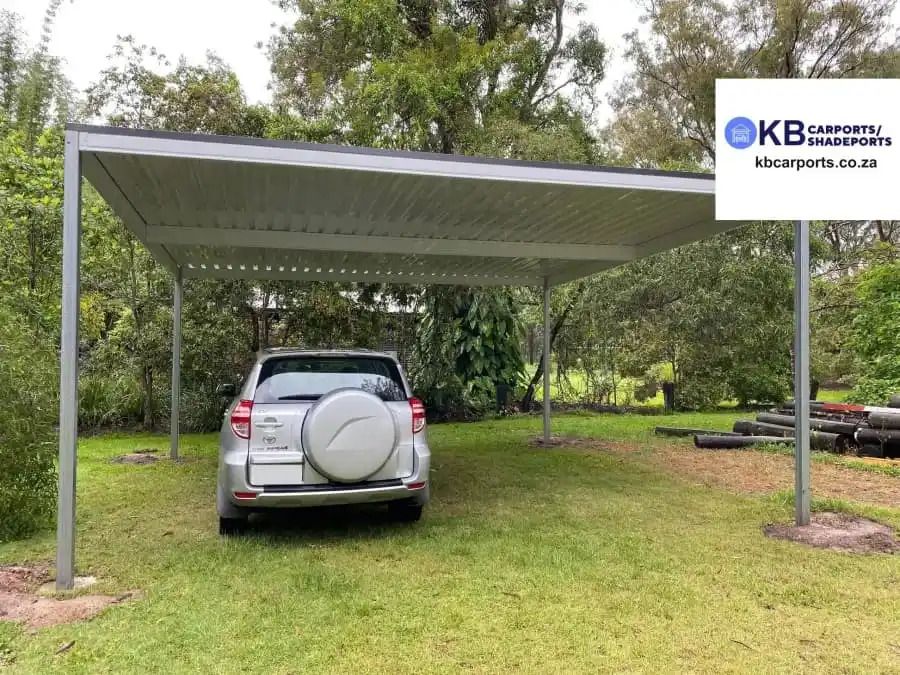
South Africa's intense UV radiation and searing summer temperatures can turn parked vehicles into ovens, with dashboard temperatures exceeding 90°C. This comprehensive guide explores how carports and shadeports dramatically reduce vehicle interior heat, protect against UV damage, and deliver surprising energy efficiency benefits that save money year-round.
The South African Heat Challenge: Understanding the Problem
UV Radiation Intensity in South Africa
South Africa experiences some of the highest UV radiation levels globally, particularly in summer months (November-February). The South African Weather Service regularly records UV Index levels of 11+ (Extreme) across most regions.
Cape Town UV Index (Summer averages):
- December-January: UV Index 11-13 (Extreme)
- Peak hours (10am-2pm): UV Index can reach 14-15
- Annual UV exposure: 30% higher than European averages
- Ozone layer thinning: Southern Hemisphere receives higher UV-B radiation
🌡️ Shocking Temperature Data
Research by the University of Stellenbosch (2023) found that vehicles parked in full sun during Cape Town summer reach interior temperatures of:
Dashboard: 92°C
Steering wheel: 68°C
Seats (leather): 58°C
Ambient interior: 65°C
Vehicle Heat Buildup: The Greenhouse Effect
Vehicles act as greenhouses due to the solar heat gain coefficient (SHGC) of automotive glass:
- Solar radiation penetrates: Glass allows 60-80% of solar energy through
- Heat gets trapped: Interior surfaces absorb energy and re-radiate as infrared
- Infrared can't escape: Glass blocks outgoing long-wave radiation
- Temperature spirals: Interior heats 3-5x faster than ambient air
Typical heat buildup timeline (35°C ambient, Cape Town summer):
| Time Parked | Full Sun | Shade/Carport | Temperature Reduction |
|---|---|---|---|
| 10 minutes | 45°C | 37°C | 8°C saved |
| 30 minutes | 57°C | 40°C | 17°C saved |
| 1 hour | 65°C | 42°C | 23°C saved |
| 2+ hours | 70°C+ | 44°C | 26°C+ saved |
How Carports & Shadeports Reduce Heat: The Science
Primary Heat Reduction Mechanisms
1. Direct Solar Radiation Blocking
- Prevents 80-99% of direct sunlight from reaching vehicle surfaces
- Eliminates direct UV radiation exposure
- Blocks infrared radiation (heat energy)
2. Ambient Temperature Reduction
- Creates microclimate 5-10°C cooler than surroundings
- Shade reduces ground surface temperatures around vehicle
- Lower radiant heat from surrounding surfaces
3. Wind Circulation Enhancement
- Open-sided designs allow natural convection
- Air movement prevents heat accumulation
- Particularly effective with shade net designs
Material-Specific Heat Performance
Solid Roofing (Chromadek, Steel)
Heat blocking efficiency: 95-99%
- ✅ Complete UV blockage (100%)
- ✅ Maximum shade density
- ✅ Blocks infrared radiation
- ⚠️ Can trap heat underneath without ventilation
- ⚠️ Creates darker environment
Interior temperature reduction: 23-28°C vs full sun
Polycarbonate Panels
Heat blocking efficiency: 85-95% (depending on tint)
- ✅ 99% UV filtration (UV-stabilized)
- ✅ Allows natural light transmission (40-70%)
- ✅ Reduces infrared radiation by 50-70%
- ✅ Cooler than solid roofing due to light transmission
- ✅ Tinted options enhance heat rejection
Interior temperature reduction: 20-25°C vs full sun
HDPE Shade Netting
Heat blocking efficiency: 75-90% (depending on shade %)
- ✅ 80-90% UV blockage
- ✅ Excellent ventilation (prevents heat trap)
- ✅ Allows diffused light (bright environment)
- ✅ Creates cooling breeze effect
- ⚠️ Less effective in extreme heat vs solid roofing
- ⚠️ No rain protection
Interior temperature reduction: 18-22°C vs full sun
Energy Efficiency Benefits: The Hidden Savings
1. Air Conditioning Fuel Consumption Reduction
The most significant energy benefit comes from reduced AC usage when starting your vehicle.
Cold start AC load comparison:
| Scenario | Initial Interior Temp | AC Runtime to 24°C | Fuel Consumed |
|---|---|---|---|
| Full sun (no carport) | 65°C | 18-22 minutes | 0.8-1.2L |
| Under shadeport | 42°C | 8-12 minutes | 0.3-0.5L |
| Under solid carport | 39°C | 6-10 minutes | 0.2-0.4L |
| Fuel Savings | - | 55-60% reduction | 0.5-0.8L saved |
Annual fuel savings calculation (Cape Town commuter):
- Work days per year: 230 days
- Daily savings: 0.6L average (2 cold starts)
- Annual fuel saved: 138 liters
- Cost savings (R24/L): R3,312 per year
- CO₂ reduction: 320kg annually
💰 5-Year Fuel Savings
Over 5 years, a typical Cape Town commuter saves R16,560 in fuel costs alone—nearly covering 30-40% of a standard carport installation!
2. Vehicle Battery Life Extension
Extreme heat is the #1 enemy of vehicle batteries. For every 8°C above 25°C, battery life decreases by approximately 50%.
Battery lifespan comparison:
- Full sun parking (avg temp 55°C): 2-3 years
- Carport parking (avg temp 38°C): 4-5 years
- Lifespan extension: 60-80%
- Savings: R2,000-R3,500 per battery replacement avoided
3. Interior Component Protection
UV radiation and heat cause accelerated aging of vehicle interior components:
Damage prevented by carport coverage:
- Dashboard cracking: Reduced by 90%
- Leather seat fading: Reduced by 95%
- Plastic trim deterioration: Reduced by 85%
- Fabric/carpet fading: Reduced by 80%
- Electronic failures (LCD, sensors): Reduced by 70%
Financial impact: Prevents R15,000-R45,000 in interior refurbishment over 10 years
4. Paint & Exterior Protection
UV radiation breaks down automotive clear coat and paint at the molecular level:
Paint degradation timeline (full sun vs carport):
| Years of Ownership | Full Sun Exposure | Carport Protection |
|---|---|---|
| 3 years | Noticeable fading | Like new |
| 5 years | Significant oxidation | Minor fading only |
| 8 years | Clear coat failure | Good condition |
| 10 years | Requires repaint (R25k-R50k) | Minor touch-up (R3k-R8k) |
Resale value impact: Carport-parked vehicles retain 8-15% higher resale value due to superior cosmetic condition.
Health & Safety Benefits
Preventing Heat-Related Dangers
1. Child/Pet Safety
- Interior temperatures of 65°C can be lethal within 10-15 minutes
- Carports reduce forgotten child/pet fatality risk by maintaining survivable temperatures
- Even brief exposure to 42°C (carport temp) provides crucial extra time
2. Steering Wheel & Seatbelt Burn Prevention
- Metal seatbelt buckles in full sun reach 75-80°C (causes 2nd-degree burns instantly)
- Leather steering wheels at 68°C cause immediate blistering
- Carport parking keeps surfaces below 45°C (safe to touch)
3. Reduced In-Car Heat Stress
- Lower initial temperatures mean less driver fatigue and stress
- Improved cognitive function (heat impairs reaction time by 15-20%)
- Reduced risk of heat-related accidents in first 10 minutes of driving
Optimal Shade Solution Selection for South African Conditions
Coastal Areas (Cape Town, Durban, Port Elizabeth)
Challenge: High UV, moderate temperatures, salt air corrosion
Recommended solution: Marine-grade steel carport with polycarbonate roofing
Why this combination:
- Polycarbonate provides 99% UV blocking without heat trap
- Natural light keeps environment pleasant
- Marine-grade frame resists coastal corrosion
- Excellent heat reduction (22-25°C) with ventilation benefits
Cost: R48,000-R68,000 (double carport)
Temperature reduction: 23-26°C vs full sun
Annual fuel savings: R3,100-R3,500
Inland High-UV Areas (Johannesburg, Pretoria, Bloemfontein)
Challenge: Extreme UV, very high temperatures (38-42°C summer), low humidity
Recommended solution: Solid steel carport with light-colored Chromadek IBR roof
Why this combination:
- 100% UV blockage for maximum protection
- Light colors reflect solar radiation (white reflects 70% of heat)
- Maximum shade density reduces ambient temp by 8-12°C
- Open sides allow convection despite solid roof
Cost: R42,000-R58,000 (double carport)
Temperature reduction: 25-28°C vs full sun
Annual fuel savings: R3,400-R3,900
Budget-Conscious Solutions (All Areas)
Recommended solution: HDPE shade net (85-90% density)
Why this works:
- 80-90% UV blockage (sufficient for most needs)
- Excellent ventilation prevents heat buildup
- 55-65% cost savings vs solid carport
- Still delivers 18-22°C temperature reduction
Cost: R18,000-R28,000 (double shadeport)
Temperature reduction: 18-22°C vs full sun
Annual fuel savings: R2,600-R3,000
ROI: 6-8 years (fuel savings alone)
Color & Material Selection for Maximum Heat Rejection
Roof Color Impact on Heat
| Roof Color | Solar Reflectance | Heat Absorption | Under-Carport Temp |
|---|---|---|---|
| White/Cream | 70-80% | 20-30% | 37-39°C (coolest) |
| Light Grey/Silver | 55-65% | 35-45% | 39-41°C |
| Beige/Tan | 45-55% | 45-55% | 41-43°C |
| Dark Grey/Charcoal | 25-35% | 65-75% | 44-46°C |
| Black/Dark Colors | 5-15% | 85-95% | 47-50°C (hottest) |
Recommendation: Choose white, cream, or light grey roofing for maximum heat rejection in South African climate.
Polycarbonate Tint Options
- Clear (no tint): Maximum light (70%), moderate heat rejection (85%)
- Bronze/Smoke: Reduced light (45%), excellent heat rejection (92%)
- Opal/White: Diffused light (60%), best heat rejection (95%)
Best for energy efficiency: Opal polycarbonate (combines light with superior heat rejection)
Ventilation Design for Optimal Cooling
Open vs Enclosed Designs
Fully Open (Standard Carport):
- ✅ Maximum natural ventilation
- ✅ Prevents heat accumulation under roof
- ✅ 3-5°C cooler than partially enclosed
- ⚠️ No wind/rain protection
Side Panels (Partially Enclosed):
- ⚠️ Can trap heat without proper ventilation gaps
- ✅ Install 300mm ventilation gap at roofline
- ✅ Use louvered panels for airflow
- ✅ Provides weather protection trade-off
Roof Height & Heat Stratification
Taller carports allow hot air to rise and escape:
- 2.4m height: Adequate for most vehicles, moderate cooling
- 3.0m height: Better heat stratification, 2-3°C cooler
- 3.5m+ height: Optimal thermal performance, 4-5°C cooler
Recommendation: Minimum 2.7m height for best balance of cost and cooling efficiency
ROI Analysis: Energy Savings Over Time
10-Year Total Cost of Ownership (Double Carport)
| Cost/Benefit Category | Amount (10 years) |
|---|---|
| Initial carport investment | -R50,000 |
| Fuel savings (AC reduction) | +R33,120 |
| Battery life extension (1 avoided replacement) | +R2,500 |
| Paint protection (avoided repaint) | +R35,000 |
| Interior component protection | +R18,000 |
| Enhanced resale value | +R25,000 |
| Net benefit after 10 years | +R63,620 |
| ROI percentage | 127% |
Break-even point: 4.2 years (considering fuel savings + vehicle protection)
Environmental Impact & Sustainability
Carbon Footprint Reduction
Annual CO₂ savings per vehicle:
- Reduced AC fuel consumption: 320kg CO₂
- Extended vehicle lifespan (less manufacturing): 180kg CO₂ equivalent
- Total household reduction (2 vehicles): 1,000kg CO₂ annually
Equivalent environmental impact:
- Planting 45 trees annually
- Removing 1 car from the road for 2 months
- Avoiding 4,200km of unnecessary driving
Sustainable Material Options
- Recycled steel frames: 60-70% recycled content available
- Recyclable polycarbonate: Can be recycled at end of life
- Solar integration: Carport roofs ideal for solar panel mounting
Smart Carport Features for Enhanced Efficiency
Solar Panel Integration
Modern carports can serve dual purpose as solar carports:
- Generate electricity: 3kW system produces 4,500-5,500 kWh annually in Cape Town
- Double benefit: Vehicle shade + renewable energy
- ROI enhancement: Solar adds R18,000-R24,000 annual savings
- EV charging ready: Perfect for future electric vehicle adoption
LED Lighting
- Motion-activated LED strips: 8-12W consumption
- Evening/night security and convenience
- Annual cost: R45-R80 electricity
Rainwater Harvesting
- Carport roof area (36m²) captures 15,000-25,000L annually (Cape Town rainfall)
- Channel to storage tanks for garden irrigation
- Additional water savings: R1,200-R2,400 per year
Maintenance for Optimal Performance
Cleaning Schedule
To maintain maximum heat rejection efficiency:
- Twice annually: Remove dust, pollen, leaf debris from roof
- Light-colored roofs: Clean annually to maintain reflectivity
- Polycarbonate panels: Gentle soap wash maintains UV protection coating
- Shade netting: Hose down quarterly to prevent dust buildup
Impact of maintenance: Regular cleaning maintains 95%+ of original heat rejection performance vs 75-80% for neglected installations.
Common Myths Debunked
Myth 1: "Shadeports aren't worth it because they don't block 100% of heat"
Reality: 80-90% shade netting still reduces interior temps by 18-22°C—more than enough to eliminate scalding surfaces and deliver R2,600+ annual fuel savings.
Myth 2: "Dark carport roofs look better and aren't that much hotter"
Reality: Dark roofs can be 10-13°C hotter than white roofs, negating 40-50% of shade benefit. Aesthetics should balance with performance.
Myth 3: "Carports only help in summer"
Reality: Year-round benefits include rain protection, bird dropping prevention, and reduced overnight condensation in winter months.
Myth 4: "AC in cars is efficient now, so heat doesn't matter"
Reality: Even modern efficient AC systems consume 0.8-1.2L/hr at full blast. Cooler starting temps mean 50-60% less AC runtime and fuel consumption.
Conclusion: The Compelling Case for Shade Solutions
In South Africa's intense UV and high-temperature climate, carports and shadeports deliver exceptional energy efficiency and vehicle protection benefits that far exceed their initial cost.
Key takeaways:
- ✅ Reduce interior temperatures by 18-28°C depending on material choice
- ✅ Save R3,000-R4,000 annually in fuel costs from reduced AC usage
- ✅ Protect R50,000+ in vehicle value over 10 years (paint, interior, components)
- ✅ Achieve 127% ROI considering all benefits combined
- ✅ Reduce household carbon footprint by 1 ton CO₂ annually
- ✅ Break even in 4-5 years on investment
Whether you choose a budget-friendly shadeport (R18k-R28k) or premium polycarbonate carport (R48k-R68k), the energy efficiency benefits alone justify the investment—with vehicle protection and property value gains as substantial bonuses.
Calculate Your Personal Energy Savings
Our team will assess your parking area, daily driving patterns, and vehicle type to provide a customized energy savings projection and ROI timeline for your specific situation.
Get Free Energy Savings Assessment