SANS 10400 Compliance: Understanding Building Regulations for Carports in Cape Town
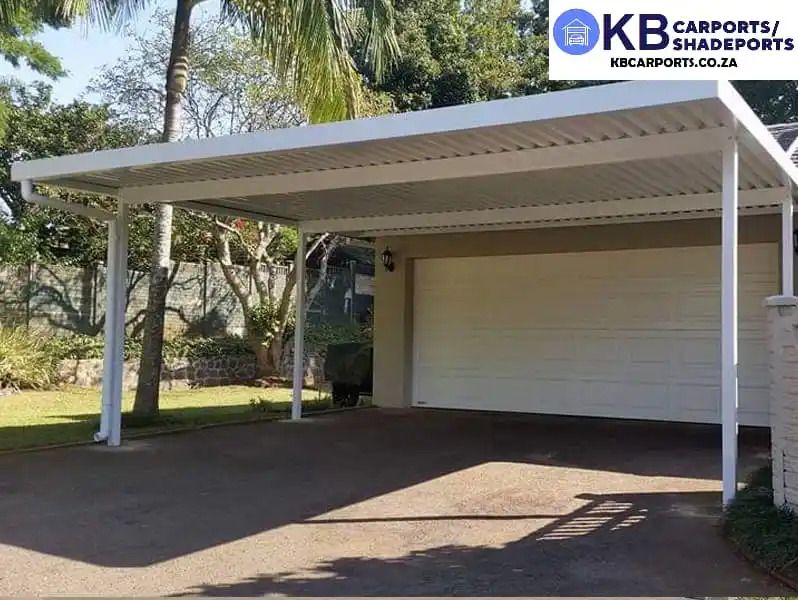
Installing a carport in Cape Town requires navigating South African building regulations, specifically SANS 10400. This comprehensive guide demystifies the compliance process, explains when permits are required, details City of Cape Town specific requirements, and provides step-by-step guidance for legal, safe carport installations.
What Is SANS 10400?
SANS 10400 (South African National Standard 10400) is the comprehensive building regulations framework that governs all construction work in South Africa, including carports and shadeports.
Key Components
SANS 10400 consists of multiple parts, with the following most relevant to carports:
- SANS 10400-A: General principles and requirements
- SANS 10400-B: Structural design (loading requirements)
- SANS 10400-K: Walls (if carport has side panels)
- SANS 10400-L: Roofs (roofing specifications)
- SANS 10400-T: Fire protection (distance from boundaries)
- SANS 10400-XA: Energy efficiency (increasingly relevant)
Supporting Standards
- SANS 10160: Structural loading (wind, dead load, live load calculations)
- SANS 10082: Timber structures
- SANS 121: Hot-dip galvanized coatings (material quality)
⚠️ Legal Requirement
All building work in South Africa, including carports, must comply with SANS 10400. Non-compliance can result in:
• Fines up to R50,000
• Forced demolition at owner's cost
• Liability if structure fails and causes injury/damage
• Complications when selling property (non-disclosure issues)
Do You Need a Building Permit for Your Carport?
The "Minor Building Works" Exemption
SANS 10400-A Part A19 defines "minor building works" that may not require formal building plan approval:
Criteria for minor building works exemption:
- Total floor area ≤ 40m²
- Not used for habitation (no living/sleeping quarters)
- Single-storey structure
- Complies with all SANS 10400 requirements
- Respects property boundaries and servitudes
When Formal Plans ARE Required (Cape Town)
The City of Cape Town requires formal building plan submission for carports that:
- ❌ Exceed 40m² total coverage
- ❌ Are within 2m of property boundary
- ❌ Are within servitude or easement areas
- ❌ Use cantilever design (requires structural engineering certification)
- ❌ Include enclosed sides (partial enclosure may require plans)
- ❌ Are on heritage properties or in heritage zones
- ❌ Involve significant excavation (≥1m depth)
Determining Your Carport's Classification
| Carport Type | Typical Size | Building Plans Required? |
|---|---|---|
| Single standard carport | 3m × 6m = 18m² | ❌ No (minor works) |
| Single large carport | 4m × 7m = 28m² | ❌ No (minor works) |
| Double standard carport | 6m × 6m = 36m² | ❌ No (minor works) |
| Double large carport | 7m × 6m = 42m² | ✅ Yes (exceeds 40m²) |
| Cantilever design (any size) | Various | ✅ Yes (engineering certification) |
| Carport with side panels | Various | ⚠️ Depends (City discretion) |
💡 Important Note
Even if your carport qualifies as "minor building works" and doesn't require formal plan submission, it must still comply with all SANS 10400 structural, safety, and boundary requirements. The exemption is from the approval process, not from the standards themselves.
SANS 10400 Technical Requirements for Carports
1. Structural Requirements (SANS 10400-B & SANS 10160)
Wind Loading (Cape Town Specific)
Cape Town falls into Wind Zone 3-4 due to south-easter winds:
- Basic wind speed: 36-40 m/s (130-144 km/h)
- Coastal areas: Design for 42 m/s (150 km/h)
- Exposed hilltops: May require 46 m/s (166 km/h)
Foundation Requirements:
- Minimum depth: 600mm below finished ground level
- Coastal sandy soils: 750-800mm minimum
- Foundation size: Minimum 400mm × 400mm per post (traditional design)
- Cantilever supports: 600mm × 600mm × 800mm+ with reinforcement
- Concrete grade: Minimum 20 MPa (M20)
Dead Load + Live Load:
- Roof dead load: Self-weight of structure + roofing material
- Live load: Maintenance access (0.25 kN/m² minimum)
- Snow load: Not applicable in Cape Town
2. Roofing Requirements (SANS 10400-L)
Material Standards:
- IBR/Corrugated sheeting: Minimum 0.48mm thickness (BMT)
- Polycarbonate: UV-stabilized, minimum 6mm thickness
- Shade cloth: HDPE with minimum 200g/m² density
- Fasteners: Corrosion-resistant (galvanized or stainless steel)
Drainage:
- Minimum pitch: 5° (8.7%) for metal roofing
- 3° (5.2%) minimum for polycarbonate
- Gutters/downpipes: Not mandatory for carports but recommended
- Stormwater management: Must not cause flooding on neighboring properties
3. Fire Safety Requirements (SANS 10400-T)
Distance from Boundaries:
| Boundary Type | Minimum Distance | Exceptions |
|---|---|---|
| Street boundary | 3m typically | Check zoning scheme |
| Side boundary | 1.5m if structure < 3m height | Party wall agreement allows 0m |
| Rear boundary | 1.5m minimum | Check zoning scheme |
| Internal boundaries (between semi-detached) | 3m minimum | Unless fire-rated wall |
Combustibility:
- Steel/aluminum structures: Non-combustible (no restrictions)
- Wooden structures: Must be ≥ 3m from boundary unless fire-treated
- Polycarbonate roofing: Considered non-combustible for carport purposes
4. Height & Clearance Requirements
- Minimum internal height: 2.1m (practical minimum 2.4m for SUVs)
- Maximum height (without plans): 4m typically
- Clearance from electrical lines: 2.5m minimum (Eskom requirement)
- Clearance under beams: Minimum 2.0m for vehicle access
City of Cape Town Specific Requirements
Zoning Scheme Compliance
The City of Cape Town operates under a Zoning Scheme that varies by suburb:
Common zoning designations affecting carports:
- Single Residential Zone 1 (SR1): Most suburban properties
- Single Residential Zone 2 (SR2): Higher-density suburbs
- General Residential Zones (GR1-GR5): Multi-unit developments
- Local Business Zones: Commercial properties
Check your property's zoning: City of Cape Town eServices
Heritage Areas & Conservation Zones
Properties in Heritage Protection Overlay Zones (HPOZ) require additional approvals:
Cape Town heritage zones include:
- City Bowl historic areas
- Constantia Valley conservation area
- Sea Point heritage zone
- Gardens residential area
- Camps Bay coastal zone
Additional requirements:
- Heritage Western Cape (HWC) approval may be needed
- Design must match architectural character
- Material choices restricted (e.g., Cape Dutch must use traditional materials)
- Processing time: 4-12 weeks additional
Homeowners Association (HOA) Approvals
Many Cape Town suburbs have HOAs with additional architectural guidelines:
- Camps Bay & Clifton: Strict design guidelines, color palettes
- Constantia estates: Materials and height restrictions
- Noordhoek/Kommetjie: Environmental sensitivity requirements
Always obtain HOA approval before construction (even if municipal plans aren't required)
The Permit Application Process (When Required)
Step 1: Document Preparation (Weeks 1-2)
Required documents:
- Architectural plans: Site plan, floor plan, elevations, sections (prepared by registered professional)
- Structural engineer's certificate: For cantilever designs or structures requiring certification
- Geotechnical report: If on problematic soils (Table Mountain Sandstone areas, sandy coastal zones)
- Title deed copy: Proof of ownership
- Surveyor general diagram: Shows property boundaries
- Neighbour notification forms: Inform adjacent properties (City provides forms)
Professional fees:
- Architectural plans: R3,500 - R6,000
- Structural engineering: R4,000 - R8,000 (cantilever designs)
- Geotechnical report: R5,000 - R12,000 (if required)
Step 2: Municipal Submission (Week 2)
Submission options:
- Online: Via City of Cape Town eServices portal (recommended)
- In-person: Regional building control offices
- Via agent: Building plans examiner/agent handles submission
Municipal fees (2025 indicative):
- Building plan scrutiny fee: R850 - R1,500 (based on value)
- Development charge: R200 - R600
- Total typical cost: R1,200 - R2,500
Step 3: Review Process (Weeks 3-6)
Processing timeline:
- Initial review: 7-10 working days
- Comments/corrections: If issues identified, 14 days to respond
- Neighbour objection period: 21 days (if objections raised, delays occur)
- Final approval: 30-45 days total (straightforward applications)
- Complex/heritage cases: 60-90 days
Common rejection reasons:
- Encroachment onto servitudes/easements
- Insufficient boundary clearance
- Inadequate structural certification
- Heritage zone non-compliance
- Incomplete documentation
Step 4: Construction (Post-Approval)
Inspection requirements:
- Foundation inspection: Before concrete pour (call inspector 48hrs ahead)
- Final inspection: Upon completion (before occupation)
Certificate of Occupancy: Not required for carports (only for habitable buildings)
Minor Building Works: Self-Certification Process
If your carport qualifies as minor building works (< 40m², standard design), you can self-certify compliance:
Your Responsibilities
- Ensure SANS 10400 compliance: Structure must meet all technical requirements
- Respect boundaries: Maintain required setbacks
- Use competent contractor: Must understand building regulations
- Notify municipality: Some councils require notification even for minor works
- Keep records: Retain structural calculations, material certificates
Best Practice Documentation (Even for Minor Works)
- Site plan showing carport location and dimensions
- Foundation details and concrete specifications
- Wind load calculations (use SANS 10160 software/tables)
- Material certificates (galvanizing standards, roofing compliance)
- Photos of construction stages
💡 Why Document Minor Works?
When selling your property, conveyancers may request proof that additions comply with SANS 10400. Good documentation prevents delays or value disputes during sale.
Common Compliance Issues & How to Avoid Them
Issue 1: Boundary Encroachment
Problem: Carport extends beyond allowable boundary setback
Consequence: Municipality can order demolition; neighbor can interdict
Prevention: Conduct accurate survey before installation; maintain 1.5m+ from side boundaries
Issue 2: Servitude Obstruction
Problem: Carport built over sewer line, water main, or Eskom servitude
Consequence: Utility provider can require removal for maintenance; liability if damage occurs
Prevention: Request servitude diagram from municipality; locate underground services before excavation
Issue 3: Inadequate Wind Rating
Problem: Structure not engineered for Cape Town's 130-150 km/h winds
Consequence: Structural failure during south-easter; liability for damage to vehicles/property
Prevention: Use qualified structural engineer for design; specify wind rating in contract
Issue 4: Heritage Non-Compliance
Problem: Modern carport design on heritage property
Consequence: Heritage Western Cape can order removal; property value impact
Prevention: Check heritage status before design; consult heritage architect if applicable
Issue 5: HOA Violations
Problem: Carport violates estate architectural guidelines (color, height, materials)
Consequence: HOA legal action; fines; forced modification/removal
Prevention: Submit designs to HOA architectural committee before construction
Enforcement & Penalties
City of Cape Town Enforcement Powers
The City's Building Development Management department can:
- Issue stop-work orders: Halt illegal construction immediately
- Prosecute contraventions: Fines up to R50,000 per offense
- Order demolition: Remove non-compliant structures at owner cost
- Refuse sale clearance: Block property transfer until rectified
Liability Implications
If your non-compliant carport causes damage:
- Wind failure damages neighbor: Full liability (insurance may not cover illegal structure)
- Structural collapse injures person: Criminal negligence possible
- Foundation failure damages utilities: Liability for repair costs
Rectification Options
If you discover existing non-compliance:
- Obtain as-built plans: Hire professional to measure/document
- Structural assessment: Engineer certifies safety
- Submit for retrospective approval: City may approve if compliant
- Modify if needed: Bring into compliance (e.g., remove side panel encroaching boundary)
- Worst case—demolish and rebuild: If fundamentally non-compliant
Rectification costs: R5,000 - R15,000 (professional fees) + modification costs
Working with Professionals
When to Hire Professionals
Structural Engineer (Required for):
- ❗ Cantilever designs (always)
- ❗ Carports > 40m²
- ❗ Exposed coastal/hilltop locations
- ❗ Problematic soil conditions
- ❗ Attached carports (wall loading calculations)
Architect/Architectural Draughtsperson (Required for):
- Structures requiring formal plans submission
- Heritage properties
- Complex designs integrating with existing structures
Building Plans Examiner (Recommended for):
- Managing approval process (saves time)
- Liaising with municipality
- Ensuring compliance before submission
Professional Fee Ranges (Cape Town 2025)
| Professional Service | Cost Range | Typical Timeline |
|---|---|---|
| Architectural plans (simple carport) | R3,500 - R6,000 | 5-10 days |
| Structural engineering (standard) | R3,000 - R5,000 | 3-7 days |
| Structural engineering (cantilever) | R5,000 - R9,000 | 7-14 days |
| Plans examiner (submission management) | R2,000 - R4,000 | Ongoing |
| Heritage consultant | R4,000 - R8,000 | 14-21 days |
DIY vs Professional Installation: Compliance Considerations
DIY Installation (Minor Works < 40m²)
Legally permissible if:
- ✅ You own the property (not rented)
- ✅ Structure qualifies as minor building works
- ✅ You understand and comply with SANS 10400
- ✅ No HOA restrictions against owner-builders
Risks of DIY non-compliance:
- ❌ Structural failure liability rests entirely on owner
- ❌ Insurance may not cover DIY construction defects
- ❌ No workmanship warranty
- ❌ Harder to prove compliance when selling
Professional Installation (Recommended)
Advantages:
- ✅ Guaranteed SANS 10400 compliance
- ✅ Workmanship warranty (typically 5 years)
- ✅ Professional indemnity insurance coverage
- ✅ Handles municipality liaison if plans required
- ✅ Engineered for Cape Town wind loads
Verification checklist when hiring contractor:
- Request proof of registration (NHBRC if applicable)
- Verify public liability insurance (minimum R5 million coverage)
- Request references from recent Cape Town installations
- Confirm they handle compliance documentation
- Get written warranty terms (materials + workmanship)
FAQs: SANS 10400 & Cape Town Carports
Q: Do I need plans for a shadeport (HDPE netting)?
A: If < 40m² and open-sided (no panels), generally no—qualifies as minor works. Still must comply with boundary setbacks and wind loading requirements.
Q: Can I build right up to my boundary with neighbor's consent?
A: You can build on the boundary line (0m setback) only with a formal party wall agreement signed by both owners, registered with the Deeds Office, and meeting fire safety requirements. Verbal consent is not sufficient.
Q: How long is building plan approval valid?
A: Cape Town building approvals are valid for 3 years from approval date. If you don't start construction within 3 years, approval lapses and you must reapply.
Q: Do I need an occupancy certificate for a carport?
A: No. Occupancy certificates are only required for habitable buildings. However, final inspection may be required if formal plans were submitted.
Q: What if I bought a property with a non-compliant carport?
A: Previous owner may have breached disclosure requirements. Options:
1. Obtain retrospective approval (if structure is actually compliant)
2. Modify to achieve compliance
3. Negotiate with seller if sale is recent
4. In extreme cases, demolish and rebuild
Q: Can Homeowners Associations override SANS 10400?
A: No. HOAs can impose additional restrictions but cannot override SANS 10400 minimum requirements. If conflict exists, SANS 10400 takes precedence legally.
Compliance Resources
City of Cape Town Contacts
- Building Development Management: 021 444 0333
- eServices Portal: www.capetown.gov.za/eservices
- Regional Offices: Various (check website for nearest)
Useful Documents
- SANS 10400 Parts A, B, L, T: Available from SABS (www.sabs.co.za)
- Zoning Scheme: City of Cape Town website
- Minor Building Works Guideline: City provides downloadable PDF
Professional Bodies
- SACAP: South African Council for Architectural Profession (architect verification)
- ECSA: Engineering Council of South Africa (engineer verification)
- NHBRC: National Home Builders Registration Council
Conclusion: Navigating Compliance Successfully
SANS 10400 compliance for Cape Town carports is straightforward when you understand the requirements:
Key takeaways:
- ✅ Most standard carports (< 40m²) qualify as minor building works—no formal plans required
- ✅ Cantilever designs always require structural engineering certification
- ✅ Boundary setbacks (1.5m+) are critical—measure carefully before installation
- ✅ Heritage areas and HOAs add approval layers—check before proceeding
- ✅ Professional installation guarantees compliance and provides legal protection
- ✅ Wind loading for Cape Town is serious—must design for 130-150 km/h minimum
Working with experienced professionals like KB Carports ensures your installation meets all SANS 10400 requirements, provides documentation for future property sales, and protects you from liability. We handle compliance assessment, professional certifications when needed, and municipal liaison—removing the compliance burden from homeowners.
Need Compliance Guidance for Your Carport?
Our team includes SANS 10400 specialists who assess your property, determine permit requirements, coordinate professional services if needed, and ensure full regulatory compliance for your carport installation.
Get Free Compliance Assessment